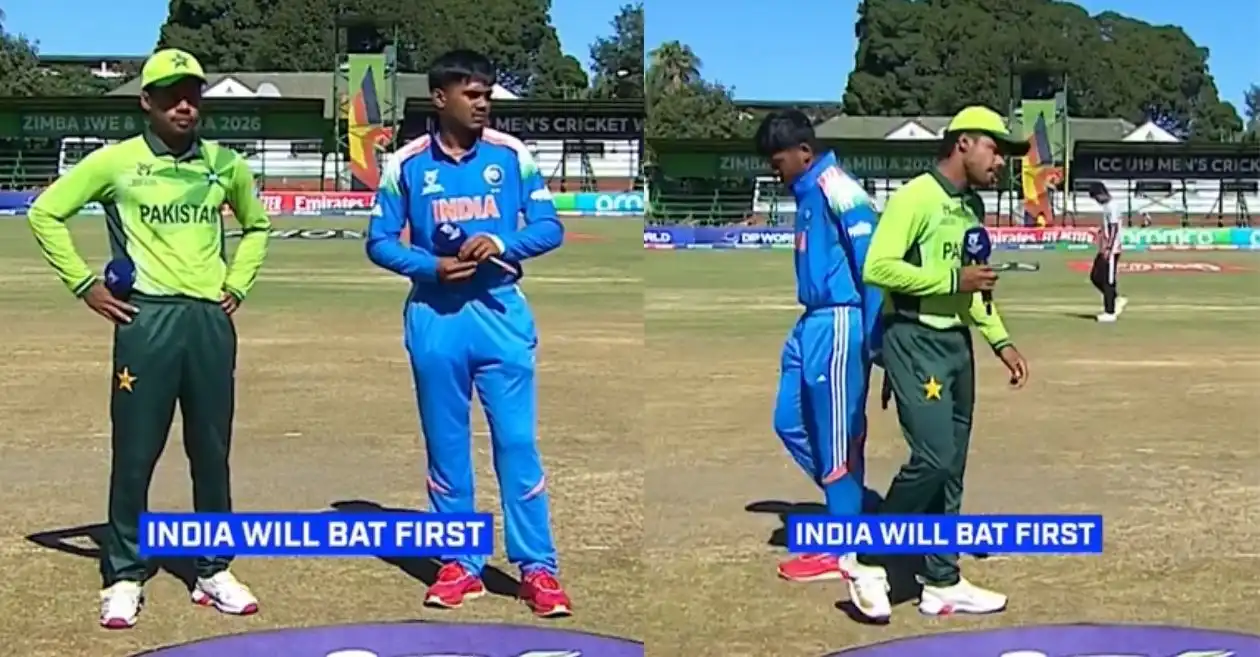


The high-tension confrontation between India And Pakistan to the ICC U19 Men’s World Cup 2026 captured the world’s attention before a ball was even bowled, but not just for cricketing reasons. During the draw for their crucial Super Six match on Sunday, Indian captain Ayush Mhatre appeared to avoid the usual handshake with the Pakistani skipper Farhan Yousafa moment that has since gone viral across social media platforms.
Ayush Mhatre avoids handshake with Farhan Yousaf
The incident occurred shortly after the toss, which Pakistan won and opted to field first. As Mhatre went through the formalities of the toss, viewers noticed him walking away without engaging in the customary handshake with his counterpart. Within minutes, clips of the moment began circulating online, sparking intense debate among fans.
Although the clip has divided opinions, it is not an isolated occurrence in recent India-Pakistan matches. Over the past few months, similar scenes have played out across several levels of the game. Whether in men’s international matches, women’s cricket or age group tournaments, the captains of the two nations have often refrained from shaking hands during the toss, reflecting the complex political and emotional context that accompanies competitions between the two great rivals.
Here is the video:
Pakistani skipper Farhan Yousaf wins the toss and Pakistan will take the field first!
With a place in the semi-finals at stake, the Indian teams would be ready for a fiery show! 👊🏻#ICCMenU19WC | #INDvPAK 👉 LIVE NOW ➡️ https://t.co/dPzP8noBCr pic.twitter.com/NrtST11Dwz
– Star Sports Football (@StarFootball) February 1, 2026
ALSO READ: T20 World Cup 2026: Ayush Badoni and Priyansh Arya included in India A squad for warm-up matches
India bounces back after initial setback
As for the contest, after winning the toss, Pakistan’s decision to bowl first proved effective early on, as India stumbled to 47 for 3, struggling with disciplined bowling and movement with the new ball. At a time when the sleeves threatened to collapse, Vedant Trivedi suddenly stepped forward calmly and responsibly. Showing maturity beyond his years, Trivedi absorbed pressure, rotated the strike effectively and punished loose deliveries to stabilize the Indian innings.
Despite losing two more wickets in the middle overs, India managed to regain some control thanks to Trivedi’s resilience. The right-hander conjured up a vital half-century, anchoring the innings as India crossed the 160-run mark in 35 overs. With the match still in progress, his move has already emerged as a potential turning point in a competition defined as much by off-field narratives as on-field performances.