

Canadian officials have accused a Toronto-area used car dealership of laundering money for the Iran-backed terrorist group Hezbollah.
Fahed Sowane, a 57-year-old Lebanese citizen who arrived in Canada on a work permit in 2016, has denied the allegations.
But in heavily redacted court records made public to Global News, officials called the Mississauga, Ont., resident a “danger to the security of Canada.”
A seasoned auto trader, Sowane exported Audis, BMWs and other vehicles to the Hezbollah-controlled port of Beirut, according to the highly classified documents.
Immigration officials concluded that the shipments constituted “money laundering for the benefit of Hezbollah,» according to the records.
As a result, authorities declared Sowane inadmissible to Canada, meaning he is not allowed to stay in the country.
The Federal Court confirmed the decision last week.
A former Canadian intelligence analyst specializing in terrorism financing said exports of high-end automobiles were a “very well-known financing technique for Hezbollah.”
To move money across borders, Hezbollah uses it to buy vehicles, which are sent to Lebanon and resold, said Jessica Davis, president of Insight Threat Intelligence.
“This means that money flows from Canada to Lebanon, but without ever touching the banking system,” said the former head of the Canadian Security Intelligence Service.
“And that’s important because banks are actually quite well equipped to detect money laundering and terrorist financing. So it’s a way for criminals to get around all the safeguards that we put in the financial system.”
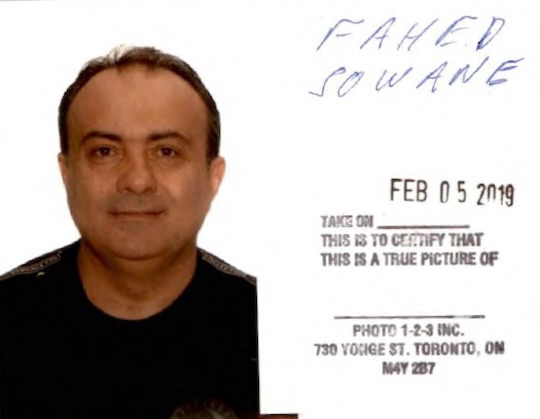
Photo of Fahed Sowane from his immigration file.
Federal Court
The Canada Border Services Agency did not respond to questions on this subject. Sowane’s lawyer said his client was disappointed by the court’s decision.
In emails to Global News, Dan Miller said immigration officials handling the case “could not offer any evidence of any concerning conduct.”
He disputed the government’s claim that Sowane exported vehicles to Beirut for less than he paid – a sign of money laundering.
“Sowane’s frustration is compounded by the fact that the Canadian government is allowing hundreds of members of the Iranian Revolutionary Guard Corps to reside freely in Canada, a group he strongly opposes,” Miller added.
“Likewise, every weekend,Hamas Supporters are freely gathering at the intersection of Bathurst Street and Sheppard Avenue in Toronto to intimidate the local Jewish community, and the government is doing nothing to stop it.
“Instead, the government is going after small individuals based on flimsy suspicions for pretending to do something, while avoiding taking any action that might offend its voting base. »
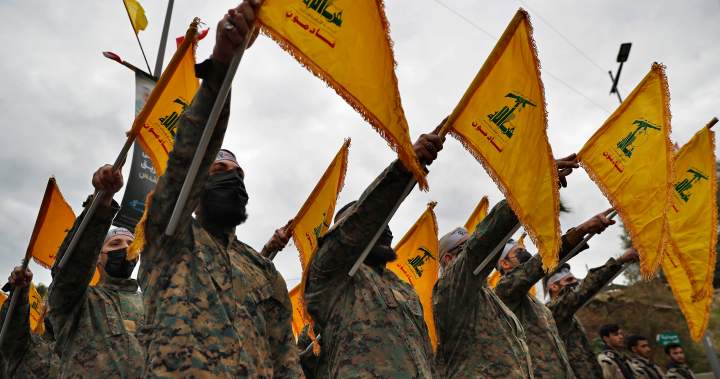
Hezbollah is a “radical Shiite group” dedicated to turning Lebanon into an Islamist republic like Iran, according to Public Safety Canada.
Armed, trained and financed by Tehran, it is part of the Iranian-led “axis of resistance”, which also includes forces based in Gaza. Hamas and the Houthis of Yemen.
Although financed by Iran, Hezbollah also has on drug trafficking and other crimes to generate revenue, and launders the profits, often through the global auto trade.
Iran has encouraged its axis groups to develop alternative sources of financing, said Davis, author of Illicit money: financing terrorism in the 21st century.
This includes taxation, extortion, investments and criminal networks, she said.
“These are the kinds of things that provide longevity and financial lifelines to terrorist groups, even when their terrorist sponsors cut them off. »
The port of Beirut is controlled by Hezbollah, according to Canadian officials, April 13, 2025. (AP Photo/Hassan Ammar).
In 2022 alert on terrorist financingCanada’s Financial Transactions and Reports Analysis Center has warned of Hezbollah’s activities.
The bulletin said that after ISIS, Hezbollah was the international terrorist group most frequently observed moving money across borders.
“A large portion of the funds suspected of financing Hezbollah were sent to Lebanon,” FINTRAC wrote in the operational alert to financial institutions.
“Funds suspected of financing Hezbollah were frequently sent or received by individuals/entities referring to the sale of cars or listed in the automobile industry. »
A car dealer for more than three decades, Sowane launched Black Swan Trading Inc. in Ontario in 2015, according to documents filed in Federal Court.
He also worked at M&J Canada Inc., where his duties included exporting used cars and parts to foreign markets, records show.
The Mississauga used vehicle dealership, which described Sowane in a letter as a full-time employee, did not respond to requests for comment.
Three years after Sowane arrived in Canada on a work permit, the Ontario Ministry of Economic Development named him a landed immigrant.
The province appoints potential immigrants who “have the skills and experience Ontario’s economy needs.” according to the government website.
The ministry responsible for the program did not respond to questions.
A CSIS security investigation report on Fahed Sowane has been largely redacted.
Federal Court
As federal immigration officials processed Sowane’s application for permanent residency, the Canadian Security Intelligence Service intervened.
After CSIS sent a security investigation file to the CBSA in February 2024, Sowane was rejected “because he posed a danger to the security of Canada.”
Although immigration officials asked Sowane for documents about his car exports, they said he failed to provide them, prompting authorities to claim he had “withheld information.”
Sowane argued that he did not share the same religious beliefs as Hezbollah, but the CBSA said “ideology cannot be a factor when it comes to personal economic profit.”
His lawyer told immigration officials that his client had “never had anything to do with Hezbollah and his business activities had never had anything to do with Hezbollah.”
“Sunnis in Lebanon hate Hezbollah and Mr. Sowane is no different. He accuses Hezbollah of turning Lebanon into a failed state and says he wants nothing to do with Hezbollah,” the lawyer wrote in an April 2024 email.
Sowane appealed the CBSA’s decision but lost.
In a decision rendered on January 21The Federal Court said the Immigration Department made its decision in a “procedurally fair and reasonable manner.”
Davis called it a “rare case of disruption of Hezbollah law enforcement in Canada,” which used the immigration control system rather than criminal courts.
“I think it’s really important that Canadians understand that these kinds of things happen in this country even in the absence of police action,” she said.
“The Canadian government is using other means to disrupt financial networks. Immigration is a really, really important part of that.”
Stewart.Bell@globalnews.ca