
Food delivery and fast commerce giant Swiggy, which owns Instamart, on January 29 reported a rise in its consolidated losses for the quarter ended December 31, 2025, to ₹1,065 crore. This marks a sharp increase from ₹799 crore in the corresponding period a year earlier, due to continued losses in its fast-moving commerce segment and increased advertising and sales expenses.
Despite strong revenue growth, the company acknowledged that recent consumer-focused investments aimed at increasing order volume – particularly in low average order value (AOV) segments – have not yielded the expected results.
“We have consciously chosen not to participate in discount-driven and purely volume-driven growth, which sacrifices AOV and margins,” Sriharsha Majety, co-founder and CEO of Swiggy Group, said in a letter to shareholders.
During the third quarter, Swiggy’s operating revenue jumped to ₹6,148 crore from ₹3,993 crore a year ago. However, the total expenditure increased to ₹7,298 crore from ₹4,898 crore in the same period of the previous fiscal.
Swiggy’s food delivery business reported a 20.5% year-on-year (yoy) increase in gross order value (GOV), reaching ₹8,959 crore. The number of monthly transacting users increased 22% year-on-year to 18.1 million, while adjusted EBITDA margins improved to 3.0% GOV, the highest in two years.
Meanwhile, Instamart’s GOV more than doubled, growing 103% year-on-year to ₹7,938 crore, with average order value climbing 39.7% to ₹746. The company reported a loss of ₹908 crore for the quarter, although the adjusted EBITDA margin improved to -11.4% from -12.1% in the second quarter. The company added 34 dark stores, bringing the network to 1,136 in 131 cities, covering 4.8 million square feet.
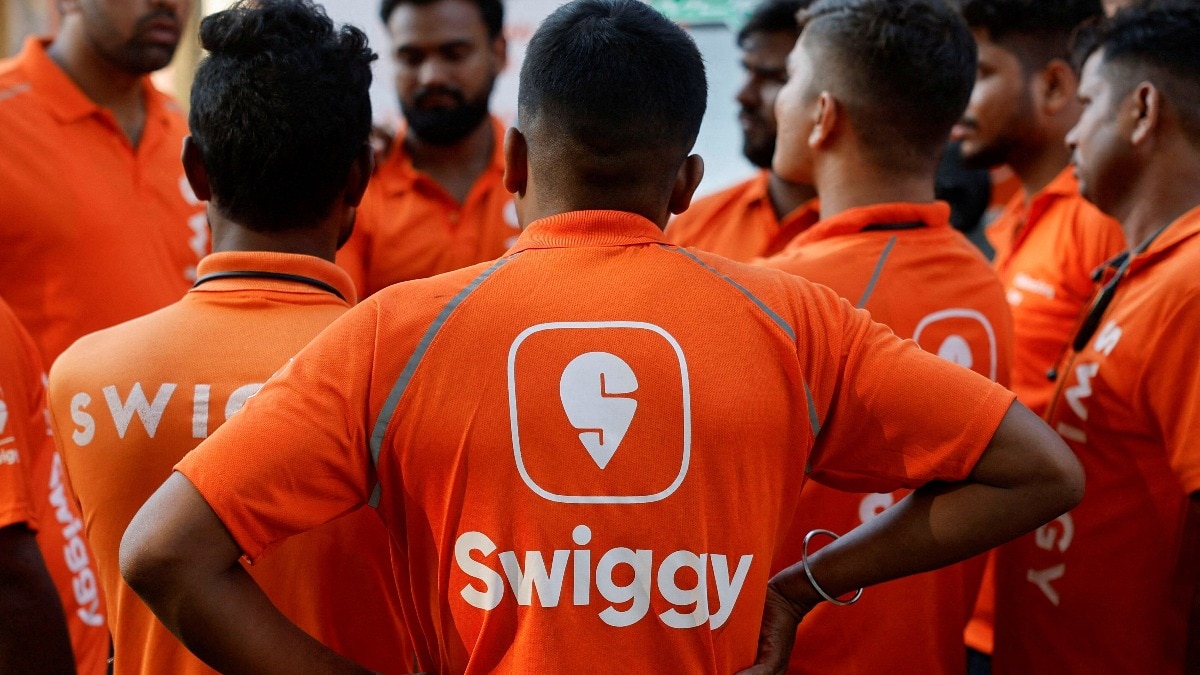
Addressing the ongoing debate on delivery times and conditions for gig workers, Swiggy clarified that delivery partners do not face any pressure or penalties for delays. Instead, the platform’s model aims to reduce last-mile distances through dense placement of dark stores, allowing partners to fulfill more orders in the same time frame. “As a result, our delivery partners’ hourly revenues have consistently continued to increase,” the company said, attributing this to order consolidation, geographic densification and seasonal incentives.
Over the past four quarters, Swiggy said it reallocated some consumer-facing investments to support long-term structural improvements, even in what it described as “irrational competition.” These investments are currently being considered in light of disappointing returns from weaker monetization on the consumer side, particularly at the lower end of the AOV pyramid.