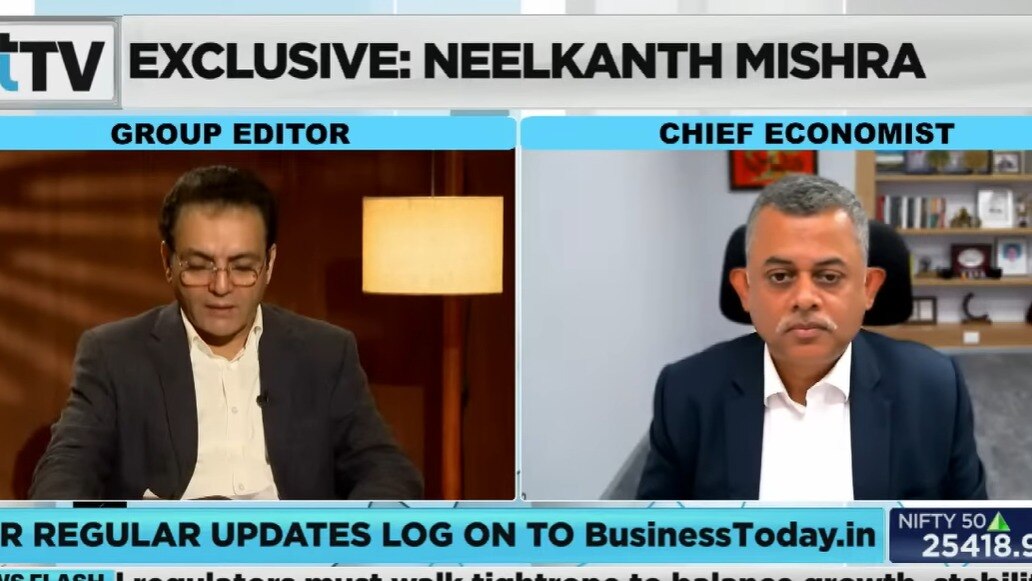

Neelkanth Mishra, chief economist at Axis Bank, said on Thursday that India should stop importing goods from China and encourage Chinese companies to set up factories in India. He says this would help India localize its production and integrate into global value chains instead of remaining a destination for undervalued finished goods.
“In the past, some of the comments made in the [Economic] Investigation… Instead of importing things from China, why not encourage the Chinese to set up factories in India, and we have seen that the government has started moving in that direction,” Mishra said. Business Today TV in an exclusive interview.
He highlighted that this strategy is crucial to developing India’s electronics and energy ecosystems, particularly for batteries and electric vehicles (EVs). Currently, China controls the lion’s share of the global value chain in these sectors.
Further, Axis Bank’s chief economist said geopolitics is not the weak point in India’s armor as of now. “Our biggest challenges are domestic deregulation, removing supply bottlenecks, and addressing urbanization.”
Exercising caution, he said growing demand for real estate would support prices and stall growth if India does not unlock real estate supply soon. He mentioned that major urban infrastructure improvements are needed to support construction-led growth for 15 to 20 years.
These improvements include faster approvals and better governance in hundreds of cities. He added, however, that as geopolitical situations evolve, they play a key role in shaping technology partnerships.
“At the same time, when you change, when you see these changes, I think the alliances, the need for technology as we develop our electronic ecosystem, there needs to be a mix of technology partnerships with Europe and with the United States and given that so much of the value chain is now in China. We need to have commercial linkages, maybe joint ventures with Chinese companies,” Mishra said.
He added: “In the energy ecosystem we need to have competitive battery prices to get competitive electric vehicles. There is so much to do in terms of technology partnership and attracting capital that we need to take geopolitics seriously and make sure our wider strategic interests are not compromised, and in that I think it’s the government.”
He also spoke on the recently signed India-EU FTA, also called “the mother of all deals”. “I think India has indicated that it champions open trade, that it sees a benefit in free trade and that it champions it, and so I think these kinds of measures can counterbalance some of the disruption that’s happening.”
Another red flag for India is China’s overcapacity, especially after US restrictions and tariffs. With US restrictions in place, Chinese exports are now being redirected to countries like Africa, Southeast Asia and other regions.
Mexico also increased import duties on Chinese goods. So what should India do? Mishra suggests: “We need to remember this selectively about intermediate goods. So we need to be very careful in thinking about where to place barriers and where not to. »
He warned that in the case of intermediate goods, excessive protection can increase domestic costs and negatively impact downstream industries.
Watch the full video here