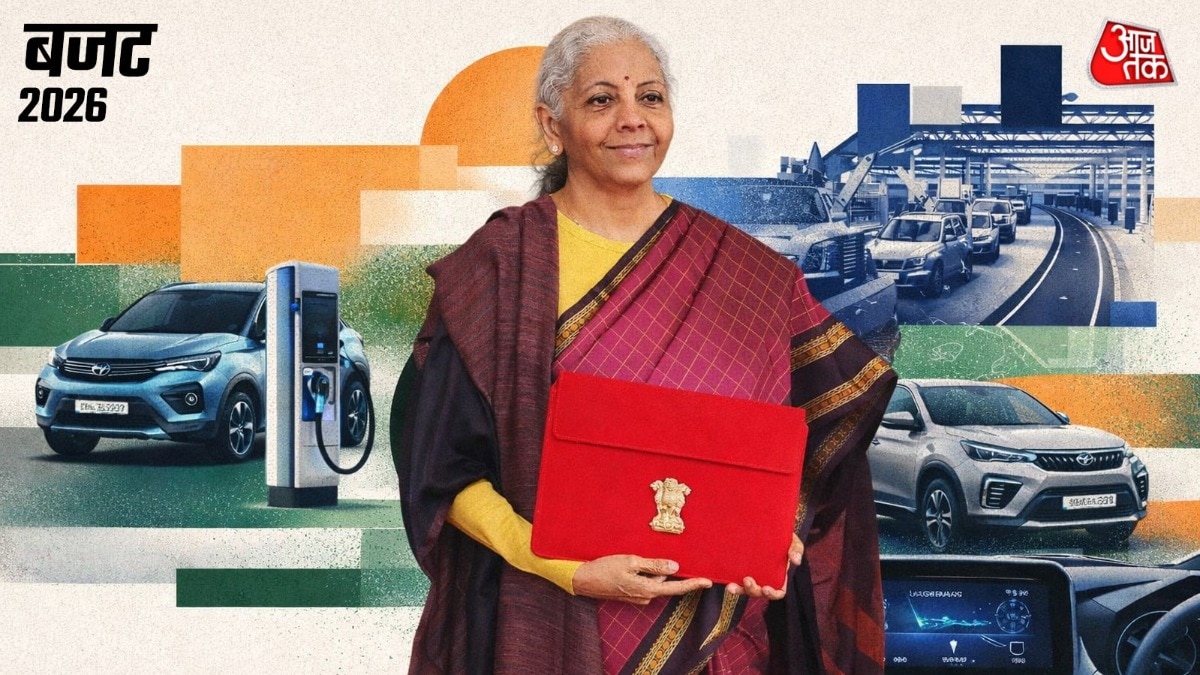

The Union Budget 2026 has doubled the Production Linked Incentive (PLI) scheme allocation for automobile and auto components to Rs 5,940 crore for 2026-27, compared to Rs 2,818.85 crore budget estimate for FY26. The revised estimate for FY26 stands at Rs 2,091 crore.
The Rs 25,938 crore PLI Auto scheme has been envisaged to boost domestic manufacturing of advanced automotive technology products, with a focus on battery electric vehicles and hydrogen fuel cell vehicles.
While the PLI Auto program saw its budget allocation increased, another PLI program for battery cells saw its spending sharply reduced.
The government’s Rs 18,100 crore PLI scheme for Advanced Chemistry Cells (ACC) to promote localization of battery cells saw its allocation reduced by 44.5 per cent, from Rs 155.76 crore in FY26 to Rs 86 crore in FY27. The revised estimate for FY26 was Rs 13.31 crore, as a single battery cell manufacturer, Ola Electric, has started its commercial operations.
As of October 2025, only 2.8% (1.4 GWh) of the targeted 50 GWh capacity had been commissioned on time, entirely by Ola Electric. Of the 40 GWh allocated so far under the ACC PLI, Reliance New Energy is the only beneficiary which has reported commissioning its second round allocation capacity (10 GWh) on time, shows a report by JMK Research and the Institute of Energy Economics and Financial Analysis (IEEFA).
The total capacity allocated under the system amounts to 40 GWh, distributed between four beneficiary companies, out of the 50 GWh offered. In the first tender held in March 2022, three companies – Reliance New Energy, Ola Electric Mobility and Rajesh Exports – were collectively allocated 30 GWh. Ola Electric received the largest share in this round, getting 20 GWh. Ola Electric plans to commission 5 GWh of its 20 GWh by March 2026. “However, Ola’s decision to limit its capacity to 5 GWh till FY 2029 dilutes the commitments envisaged by the scheme,” the report said.
Recipients faced significant supply chain and implementation bottlenecks, such as strict domestic value added (DVA) requirements, an aggressive two-year installation schedule, and visa approval delays for Chinese technical specialists needed to install the equipment, leading to delays in commissioning capacity, the report noted.
For the PM Electric Drive Revolution in Innovative Vehicle Enhancement (PM E-DRIVE) program, the Union Budget 2026 allocated Rs 1,500 crore for FY27, down 62.5% from the Rs 4,000 crore budgeted in FY26. To be clear, the revised estimate for the PM E-DRIVE program for FY26 stood at Rs 1,300 crore.