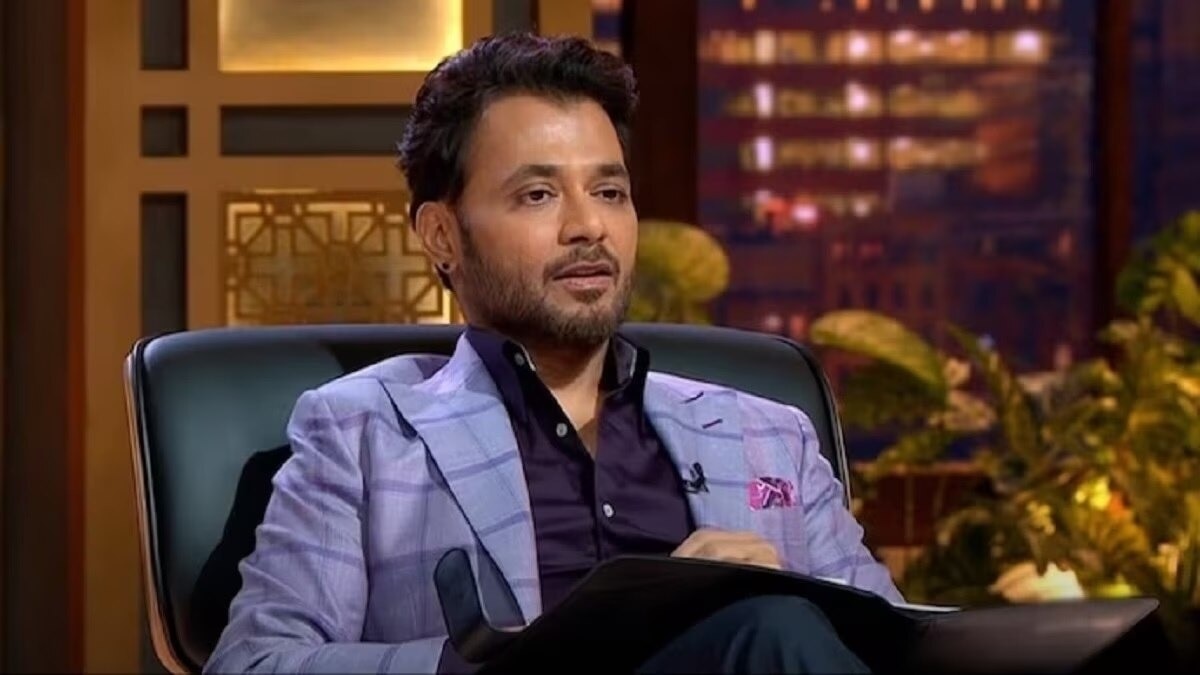

Anupam Mittal, founder of Shaadi.com and judge on season 5 of Shark Tank India, weighed in on a growing but often misunderstood trend in India’s startup ecosystem: founders resigning as CEOs of their own companies.
In a detailed post on LinkedIn, Mittal argued that such departures should not be seen as a failure, but as a sign of maturity and evolution.
Mittal pointed out that for years, Indian startups operated under the assumption that the founder should also remain CEO indefinitely. However, he believes that this thinking no longer suits today’s rapidly changing startup environment.
Startups are now growing at a pace where the skills required at different stages vary widely. What works for a team of 10 people often falls apart at 100 people, and what works for 100 people may fall apart at 1,000 employees.
Different stages, different skills
According to Mittal, most founders excel in the early stages, taking an idea from zero to one, then from one to ten. But as businesses scale, they require a different set of capabilities: operational depth, process management, and experience managing large organizations.
At this stage, bringing in a professional CEO can strengthen the company rather than weaken it.
Global standard, Indian stigma
Mittal noted that in global markets, founders who step aside to pursue professional leadership are widely accepted and even encouraged. The founder retains ownership and benefits for the long term, while the company benefits from seasoned management, which often leads to better results for shareholders.
In India, however, such transitions are often described as the founder being “fired”, bankrupt or involved in wrongdoing. Mittal pointed out that in most cases this narrative is simply false.
Make yourself replaceable
One of Mittal’s strong points was that founders should strive to make themselves replaceable. He cited global tech giants like Google, Apple and Microsoft as examples of companies that have become enduring institutions by evolving their leadership beyond their founders.
Often, stepping down as CEO isn’t about losing control, but rather about choosing what’s best for the long-term growth of the company. According to Mittal, a founder stepping down as CEO can be a mark of strategic clarity, not a defeat.