
The National High Speed Rail Corporation Limited (NHSRCL), which is implementing the country’s first Mumbai-Ahmedabad high-speed rail, has already submitted detailed project reports (DPRs) on six of the seven high-speed rail corridors to the Ministry of Railways.
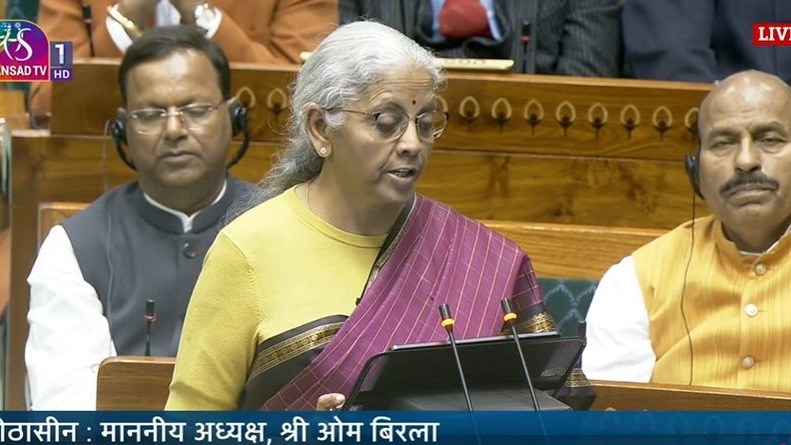
Union Finance Minister Nirmala Sitharaman announced seven high-speed rail corridors to connect major cities. The proposed routes are Mumbai – Pune, Pune – Hyderabad, Hyderabad – Bengaluru, Hyderabad – Chennai, Chennai – Bengaluru, Delhi – Varanasi and Varanasi – Siliguri. These corridors will reduce travel times, reduce pollution and support regional development.
The NHSRCL has already submitted DPRs for all routes, except Varanasi-Siliguri, to the Ministry of Railways. DPRs contain all elements related to projects, such as objectives, scope, methodology, budget and risk assessment.
The NHSRCL has been working on these DPRs for 2 to 4 years. However, the decision to approve a HSR corridor/project depends on many factors such as the outcome of the DPR, techno-economic feasibility, availability of resources and financing options.
The monthly project monitoring flash report of the Ministry of Statistics and Program Implementation (MoSPI) for November 2025 indicates that the corridor has crossed a physical progression of 56%. According to the report, over Rs 85,338 crore has been spent so far on the bullet train project, which is estimated to cost around Rs 1.08 lakh crore once completed.
However, the project cost increased to Rs 1.98 lakh crore due to delays in acquisition of land, clearances and rolling stock.
Railway Minister Ashwini Vaishnaw had earlier announced that India’s first high-speed train will begin its inaugural 100-km journey between Surat and Vapi in August 2027. The stretch is part of the larger 508-km Mumbai-Ahmedabad high-speed corridor. The project is expected to be fully operational by 2029.
Vaishnaw said the Mumbai-Ahmedabad travel time would come down to 1 hour 58 minutes once the corridor is ready and trains on the 508 km corridor would operate at speeds of up to 320 kmph.