
Venezuela’s interim president, Delcy Rodriguez, has signed into law a reform bill that will pave the way for further privatization of the South American country’s nationalized oil sector, meeting a key demand from her US counterpart, Donald Trump.
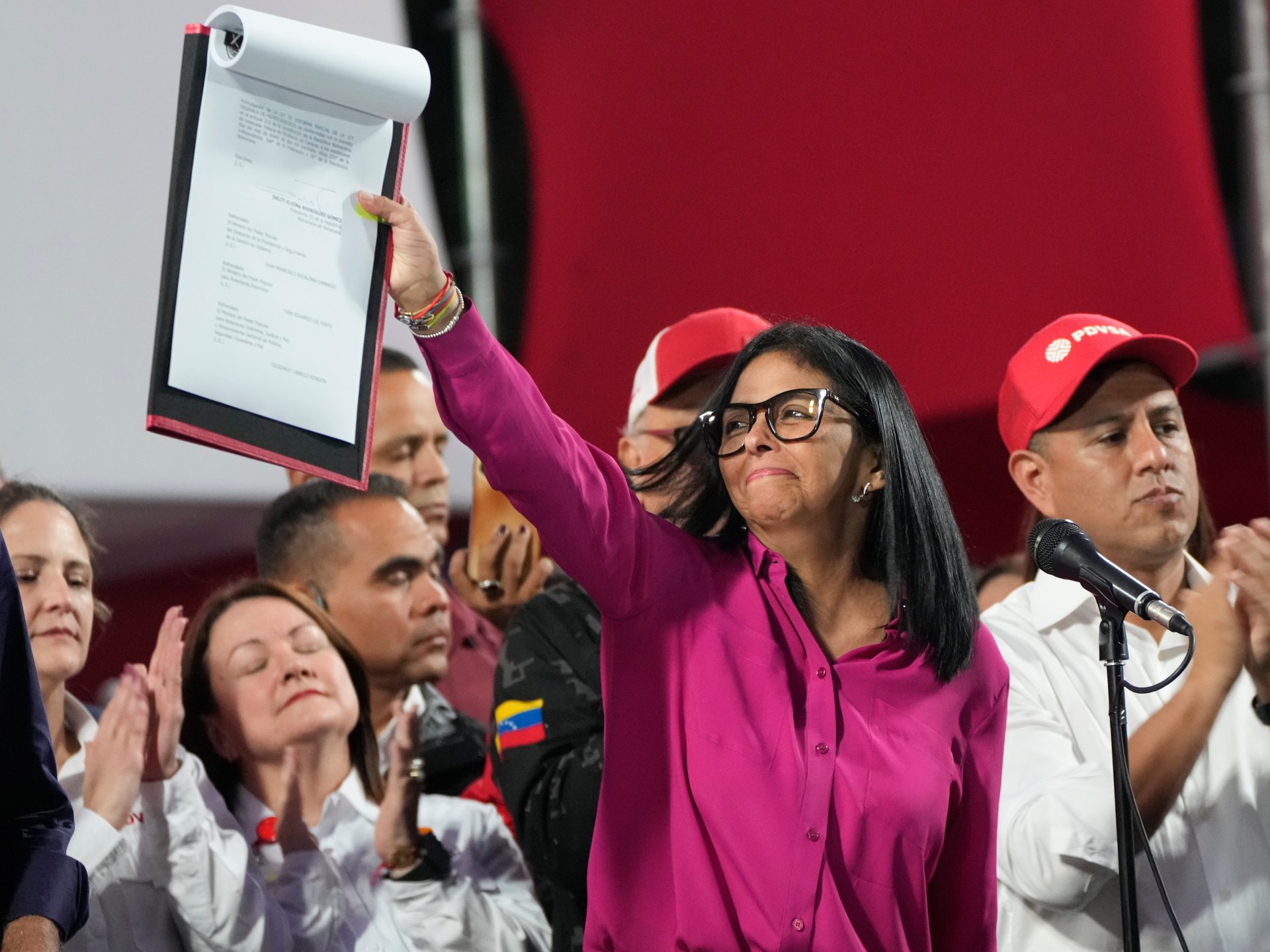
On Thursday, Rodriguez held a signing ceremony with a group of state oil workers. She hailed the reform as a positive step for Venezuela’s economy.
Recommended Stories
list of 3 itemsend of list
“We’re talking about the future. We’re talking about the country that we’re going to give to our children,” Rodriguez said.
The ceremony took place hours after the National Assembly – dominated by members of Rodriguez’s United Socialist Party – passed the reform.
“After the suffering, only good things will come,” said Jorge Rodriguez, Assembly Speaker and brother of the interim president.
Since the U.S. military’s kidnapping of former Venezuelan leader Nicolas Maduro and his wife Cilia Flores on January 3, the Trump administration has sought to pressure President Rodriguez to open the country’s oil sector to outside investment.
Trump even warned that Rodriguez could “pay a very high price, probably higher than Maduro,” if she did not comply with his demands.
Thursday’s legislation will give private companies control over the sale and production of Venezuelan oil.
It would also require legal disputes to be resolved outside of Venezuela’s courts, a change long sought by foreign companies, which say the country’s justice system is dominated by the ruling Socialist Party.
The bill would also cap royalties collected by the government at 30 percent.
As Rodriguez signed the reform bill, the Trump administration simultaneously announced it would ease some sanctions restricting the sale of Venezuelan oil.
The Treasury Department said it would authorize limited transactions by the country’s government and state oil company PDVSA that were “necessary for the removal, exportation, re-export, sale, resale, supply, storage, marketing, purchase, delivery, or transportation of petroleum of Venezuelan origin, including the refining of such petroleum, by an established U.S. entity.”
Previously, Venezuela’s entire oil sector was subject to broad U.S. sanctions imposed in 2019, during Trump’s first term as president.
The series of changes announced Thursday aim to make Venezuela’s oil market more attractive to outside oil companies, many of which are reluctant to invest in the country.
Under Maduro, Venezuela has seen waves of political repression and economic instability, and much of its government remains intact, although Maduro himself is currently awaiting trial in a New York prison.
His kidnapping left dozens dead and critics accused the United States of violating Venezuelan sovereignty.
Venezuela nationalized its oil sector in the 1970s, and in 2007 Maduro’s predecessor, Hugo Chavez, pushed the government to increase control and expropriate foreign assets.
After Maduro’s kidnapping, Trump administration officials said the United States would decide to whom and under what conditions Venezuelan oil would be sold, with the proceeds deposited into a U.S.-controlled bank account.
Concerns about the legality of such measures or Venezuela’s sovereignty have been dismissed by Trump and his allies, who previously said Venezuelan oil should “belong” to the United States.