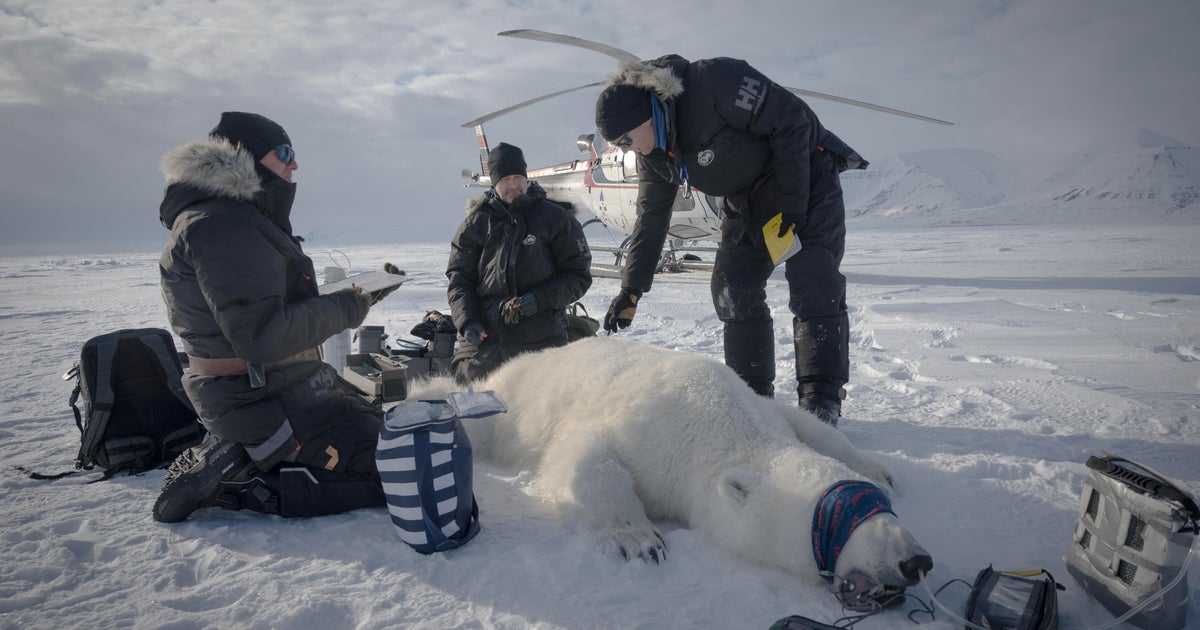

Scientists have reported rare good news from the Arctic. As the climate changes and the ice melts, in at least one region, polar bears are thriving – finding new ways to survive and even gaining weight.
“A big bear is a healthy bear,” Jon Aars, a senior scientist at the Norwegian Polar Institute, told CBS News on Thursday.
He has been tracking polar bears on the remote Norwegian archipelago of Svalbard in the Arctic for more than 20 years. He led a team of researchers who meticulously tracked the weight and size of nearly 800 bears between 1992 and 2019.
They found that the polar giants were in good shape, able to survive and continue raising new young.
OLIVIER MORIN/AFP/Getty 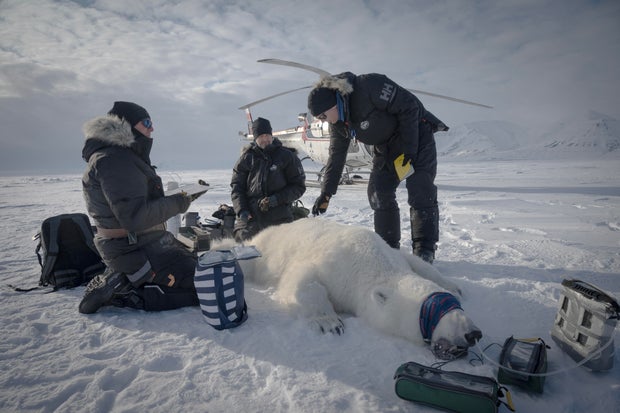
“I was quite surprised,” Aars admitted, “because we’ve lost so much sea ice since I started.”
For years, scientists have been sounding the alarm that shrinking sea ice cover could endanger polar bears, which use the ice as a platform to hunt seals.
“Some of us would predict that they should be in trouble already,” Aars said.
But what his team found suggests that bears are adapting to smaller patches of ice, and that might even help them hunt more efficiently because their prey, which also relies on ice, is concentrated in smaller areas.
“I think it shows they need less sea ice than we thought,” Aars told CBS News.
His team’s research also found that melting ice is pushing polar bears to get creative on land, where they increasingly feast on other prey, like reindeer and walruses.
“Some of them would now be on the ground up to 90% of the time, which is a lot,” he said.
Sebnem Coskun/Anadolu/Getty 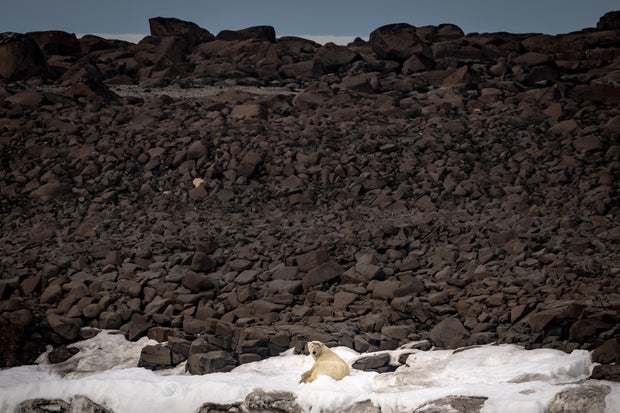
While the bears’ prosperity is undeniably good news, Aars stressed that more research is needed to understand how polar bears in other parts of the Arctic are adapting to global warming. And he cautioned that his team’s research does not attempt to predict how animals will respond to continued warming in the Arctic.
“The bears are still able to cope with the situation as it is today,” he said. “The bad news is that the predictions [are that] we will quickly lose sea ice on Svalbard. »
Aars and many other scientists remain concerned, in other words, that the gains made by Svalbard’s bears are temporary and could be reversed.