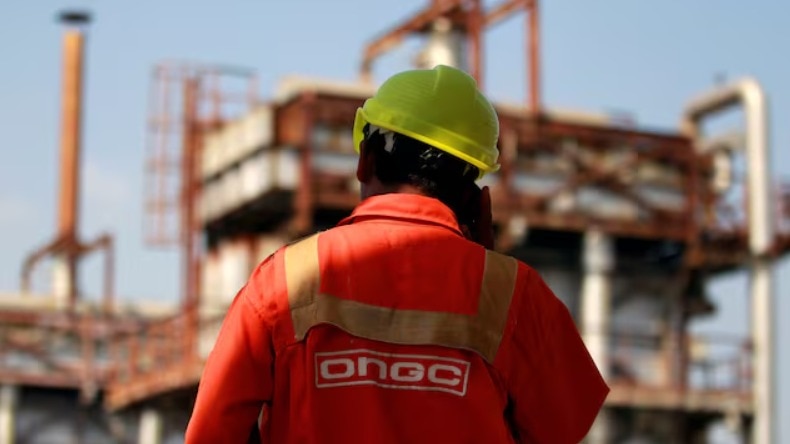

State-owned oil and gas giant ONGC is set to significantly ramp up its exploration strategy, targeting annual exploration capital expenditure (capex) of up to ₹12,000 crore for the financial year 2026-27. This planned outlay represents an increase of at least 20 per cent over its investments of ₹10,000 crore in FY26, sources familiar with the matter told Business Today.
The capital will be deployed in strategic tranches to expand the company’s presence in the deep and ultra-deep water frontiers. With over 100 exploration wells underway on the east and west coasts, the move marks a decisive shift towards high-risk, high-return offshore basins to strengthen India’s domestic production and improve energy security.
This comes amid heightened geopolitical tensions that have prompted crude-importing economies like India to gradually reduce their dependence on Russian oil and diversify their sources of supply. New and emerging partnerships with the UAE and Canada, as well as the landmark India-EU Free Trade Agreement, highlight India’s growing focus on strengthening energy security. In this context, Indian Oil Marketing Companies (OMCs) should explore collaborations enabled by these FTAs to increase domestic production while expanding their basket of crude imports.
A roadmap of 100 wells
The ₹12,000-crore budget for FY27 will fund a massive drilling campaign. Of the more than 100 wells planned, a significant portion will be dedicated to stratigraphic drilling in category II and III basins, regions where commercial viability has not yet been proven. The company has set a crude oil production target of around 22 million tonnes for the current year, and FY27 investments are seen as key to maintaining or slightly exceeding these levels in the coming years.
“For now, we expect production to be marginally higher than last year. The fields largely remain the same, the challenges also remain similar,” Kumar added, pointing out that even as assets age, applying new technologies through global partnerships remains the most viable route. Since British Petroleum (BP) was mobilized as TSP at Mumbai High in April 2025, the results have been tangible. Kumar noted that the collaboration was successful in stabilizing production declines, adding about 3,500 to 4,000 barrels of oil per day and 2 to 2.5 MMSCMD of gas compared to the minimum baseline profile.
“Since BP mobilized in April, the decline in production has stabilised. Current production is already above the agreed baseline profile,” Kumar said, pointing out that the success of Mumbai High has paved the way for much wider deployment in the western offshore.
Global awareness of Western offshore
Building on this momentum, ONGC has launched a new global tender for its other Western Offshore oil fields, specifically excluding Mumbai High. This tender covers the main production hubs, including Bassein, Heera and Neelam. The deadline for submitting these offers is March 16, 2026, with the aim of finalizing the partners by the end of the first quarter of FY27.
“We are now looking for another TSP covering the western offshore, excluding the Mumbai High field,” Kumar told media on the sidelines of India Energy Week 2026. “The tender has been floated and we have personally communicated with CEOs of 10 major E&P operators, including Shell, BP, Chevron, ExxonMobil and TotalEnergies.”
Strategic Alliances on the East Coast
While the Western Offshore strategy focuses on life extension and 2, the East Coast is gearing up for revolutionary exploration. ONGC is currently exploring technical exploration and production partnerships with ExxonMobil and BP to unlock the vast potential of the Andaman and Mahanadi basins.
“The company is in active talks with ExxonMobil regarding joint bids under the upcoming Open Acreage Licensing Policy (OALP) Round 10, but we are yet to receive a response from Exxon,” ONGC Chief Exploration Officer OP Sinha said on the sidelines of India Energy Week 2026.