
For average workers in Russia, this is a big salary. For criminals seeking to escape harsh conditions and abuse in prison, it’s a chance for freedom. For immigrants hoping for a better life, it’s a simplified path to citizenship.

They just need to sign a contract to fight in Ukraine.
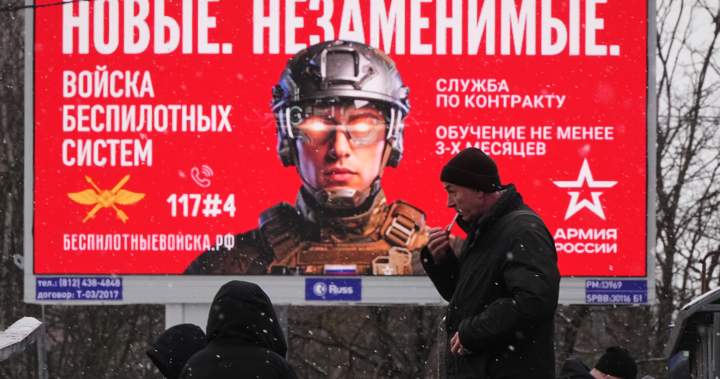
As Russia seeks to rebuild its forces after nearly four years of war – and avoid an unpopular nationwide mobilization – it is pulling out all the stops to find new troops to send to the battlefield.
Some come from abroad to fight in what has become a bloody war of attrition. After signing a mutual defense treaty with Moscow in 2024, North Korea sent thousands of troops to help Russia defend its Kursk region against a Ukrainian incursion.
Men from South Asian countries including India, Nepal and Bangladeshcomplain of having been duped by recruiters who promised them jobs. Officials in Kenya, South Africa and Iraq say the same thing happened to their countries’ citizens.
Russian numbers in Ukraine
President Vladimir Putin said last month at his annual news conference that 700,000 Russian troops were fighting in Ukraine. He gave the same figure in 2024, and a slightly lower figure – 617,000 – in December 2023. It is unclear whether these figures are accurate.
The number of military casualties remains hidden, with Moscow having published limited official figures. Britain’s Ministry of Defense said last summer that more than a million Russian troops may have been killed or injured.
Independent Russian news site Mediazona, working with the BBC and a team of volunteers, scoured news reports, social media and government websites and collected the names of more than 160,000 killed soldiers. More than 550 of them were foreigners from more than two dozen countries.
How Russia recruits new soldiers
Unlike Ukraine, where martial law and nationwide mobilization have been in effect since Russia’s full-scale invasion began in February 2022, Putin has resisted ordering a full-scale call-up.
When a limited mobilization of 300,000 men was attempted later that year, tens of thousands fled abroad. The efforts stopped a few weeks later, once the goal was achieved, but a decree from Putin left the door open for a new summons. It also made all military contracts effectively indefinite and prohibited soldiers from leaving the service or being discharged unless they reached a certain age limit or were incapacitated due to injury.

Get the latest national news
For news impacting Canada and around the world, sign up to receive breaking news alerts sent directly to you as they happen.
Since then, Moscow has relied largely on what it describes as voluntary engagement.

The flow of voluntary recruits signing military contracts has remained strong, exceeding 400,000 last year, Putin said in December. It has not been possible to independently verify this claim. Similar figures have been announced in 2024 and 2023.
Activists say these contracts often stipulate a fixed length of service, such as one year, leading some potential candidates to believe the appointment is temporary. But contracts are automatically extended indefinitely, they say.
The government offers high salaries and many benefits to recruits. Regional authorities offer various commitment bonuses, sometimes amounting to tens of thousands of dollars.
In the Khanty-Mansi region, in central Russia, for example, a hired worker would receive around $50,000 in various bonuses, according to the local government. That’s more than twice the average annual income in the region, where monthly wages in the first 10 months of 2025 were just over $1,600.
There are also tax breaks, debt relief and other benefits.
Despite the Kremlin’s claims that it relies on voluntary enlistment, media and rights groups say conscripts — men aged 18 to 30 doing mandatory, fixed-term military service and exempt from being sent to Ukraine — are often forced by their superiors to sign contracts that send them into combat.
Recruitment also extends to prisoners and those in pre-trial detention centers, a practice carried out early in the war by the late mercenary leader Yevgeny Prigozhin and adopted by the Defense Ministry. The laws now allow the recruitment of convicts and suspects in criminal cases.


Foreigners are also recruiting targets, both in Russia and abroad.
Laws were passed offering expedited Russian citizenship to enlistees. Russian media and activists also report that raids in areas where migrants usually live or work push them into military service, with new citizens sent to enlistment offices to determine whether they are eligible for compulsory service.
In November, Putin decreed that military service was mandatory for some foreigners seeking permanent residency.
Some are allegedly lured to Russia by trafficking networks that promise them jobs, then encourage them to sign military contracts. In 2023, Cuban authorities identified and sought to dismantle one of these networks operating from Russia.
Maksudur Rahman, 31, who escaped after fighting for the Russian army, shows a Russian military dog tag during an interview with The Associated Press in Lakshmipur, Bangladesh, December 10, 2025.
(AP Photo/Rajib Dhar)
Nepal’s Foreign Minister Narayan Prakash Saud told The Associated Press in 2024 that his country had asked Russia to return hundreds of Nepali nationals recruited to fight in Ukraine, as well as repatriate the remains of those killed during the war. Nepal has since banned its citizens from traveling to Russia or Ukraine for work, citing recruitment efforts.
Also in 2024, India’s federal investigation agency said it had dismantled a network that lured at least 35 of its citizens to Russia under the pretext of employment. The men were trained for combat and deployed to Ukraine against their will, with some being “seriously injured”, the agency said.
When Putin hosted Indian Prime Minister Narendra Modi for talks in 2024, New Delhi said its nationals “misled” into joining the Russian military would be removed from service.
Iraqi officials say about 5,000 of its citizens have joined the Russian military, along with an unspecified number fighting alongside Ukrainian forces. Authorities in Baghdad have cracked down on these recruitment networks, and one man was convicted last year of human trafficking and sentenced to life in prison.
An unknown number of Iraqis have been killed or missing during the fighting in Ukraine. Some families reported that relatives were lured to Russia under false pretenses and forced to enlist; in other cases, Iraqis joined voluntarily for the salary and Russian citizenship.
Foreigners drawn into combat are particularly vulnerable because they do not speak Russian, have no military experience and are considered “indispensable, to put it bluntly,” by military commanders, said Anton Gorbatsevich of the activist group Idite Lesom, or “Lose Yourself,” which helps men desert the army.
A drain on a slowing economy
This month, a Ukrainian agency responsible for processing prisoners of war said more than 18,000 foreign nationals had fought or were fighting on the side of Russia. Nearly 3,400 people have been killed and hundreds of citizens from 40 countries are being held in Ukraine as prisoners of war.
If true, that represents just a fraction of the 700,000 troops Putin says are fighting for Russia in Ukraine.
Using foreigners is just one way to meet constant demand, said Artyom Klyga, head of the legal department of the Conscientious Objectors Movement, noting that Russian recruitment efforts appear stable. Most of those seeking help from the group, which helps men avoid military service, are Russian citizens, he said.
Kateryna Stepanenko, a Russia researcher at the Washington-based Institute for the Study of War, said the Kremlin had become more “creative” over the past two years in attracting soldiers, including foreigners.
But recruitment efforts are becoming “extremely costly” for Russia, facing an economic slowdown, she added.