
The EU is the second largest destination for Indian textile and clothing exports after the United States. In 2024, the EU’s global imports of textiles and clothing stood at $263.5 billion, highlighting the scale and long-term potential of the European market for Indian exporters.
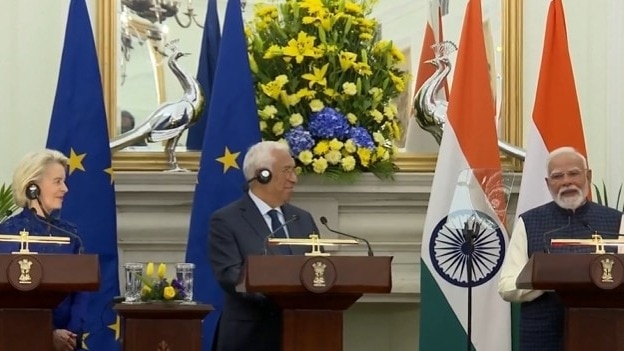
India and the European Union have concluded negotiations on a historic free trade agreement (FTA), marking a major breakthrough in one of India’s most strategic economic partnerships. Designed as a modern, rules-based trade framework, the agreement aims to address contemporary global challenges while enabling deeper market integration between the world’s fourth and second-largest economies.
FTA and textiles and clothing
Under the FTA, India is expected to enjoy duty-free access on all tariff lines relating to textiles and clothing, with tariff reductions of up to 12%. This would open up the EU import market of INR 22.9 lakh crore (USD 263.5 billion) to Indian exporters. Building on India’s global textile and apparel exports worth INR 3.19 lakh crore ($36.7 billion), including INR 62.7 thousand crore ($7.2 billion) to the EU, the deal is expected to significantly expand opportunities in yarn, cotton and synthetic fiber garments, ready-made garments, men’s and women’s wear and home textiles. This improved access is expected to help MSMEs expand their operations, generate employment and strengthen India’s position as a reliable and sustainable sourcing partner.
Crucially, the FTA addresses a long-standing tariff disadvantage that India faces compared to competitors such as Bangladesh, Pakistan and Turkey. By leveling the playing field, the agreement provides a decisive boost to labor-intensive sectors and improves price competitiveness in one of the world’s most sophisticated consumer markets.
EU-India trade relations
For the Indian textile and clothing sector, the FTA is particularly important. The European Union is the second largest destination for Indian textile and clothing exports after the United States. In 2024, the EU’s global imports of textiles and clothing stood at $263.5 billion, highlighting the scale and long-term potential of the European market for Indian exporters. Over the past five years, India’s textile exports to the EU have recorded steady growth, supported by a diversified export basket covering value-added and labour-intensive segments.
Ready-made garments account for around 60% of India’s textile exports to the EU, followed by cotton textiles with 17% and man-made fiber (MMF) textiles with 12%. Smaller but significant shares come from handicrafts and carpets (4 percent each), jute products (1.5 percent) and wool, hand-woven and silk products. This composition highlights the artisanal, MSME-driven and employment-intensive nature of India’s textile trade with Europe.
Job
The textile sector directly employs around 45 million people in India. Better access to the EU market is expected to improve capacity utilization, boost production and support employment in MSME clusters. The FTA is also likely to encourage investment, technology transfer and sustainability-related improvements, particularly in the MMF, technical textiles and green manufacturing sectors aligned with EU standards.
Beyond apparel, the agreement provides significant access to the home decor, handicrafts and wooden furniture market, with duty reductions of up to 10.5%, strengthening India’s presence in high-value, design-led segments.
Cluster centers will benefit
India’s textile exports to the EU come from 342 districts across the country, reflecting wide regional participation. Cluster hubs such as Tiruppur, Karur, Surat, Moradabad and Bhadohi are expected to benefit significantly. Beyond tariff liberalization, the FTA also addresses non-tariff barriers through regulatory cooperation, customs facilitation and predictable trade rules. Aligned with the vision of ‘Viksit Bharat 2047’, the India-EU FTA positions India as a competitive and forward-looking global textile and apparel hub, while laying the foundation for inclusive and resilient growth.