
Samuel L. Jackson had to pay his dues, and then some, before getting his first real starring role. He struggled for more than a decade in small supporting roles, then broke out playing crack addict Gator Purify in Spike Lee’s “Jungle Fever.” He was so spectacular in this film that the Cannes Film Festival brought back its Best Supporting Actor award to honor him. Three years later, he wowed moviegoers with his thunderous recitation of Ezekiel 25:17. as hitman Jules Winnfield in “Pulp Fiction”, and Jackson was off to the races – as long as he was a co-lead or part of an ensemble.
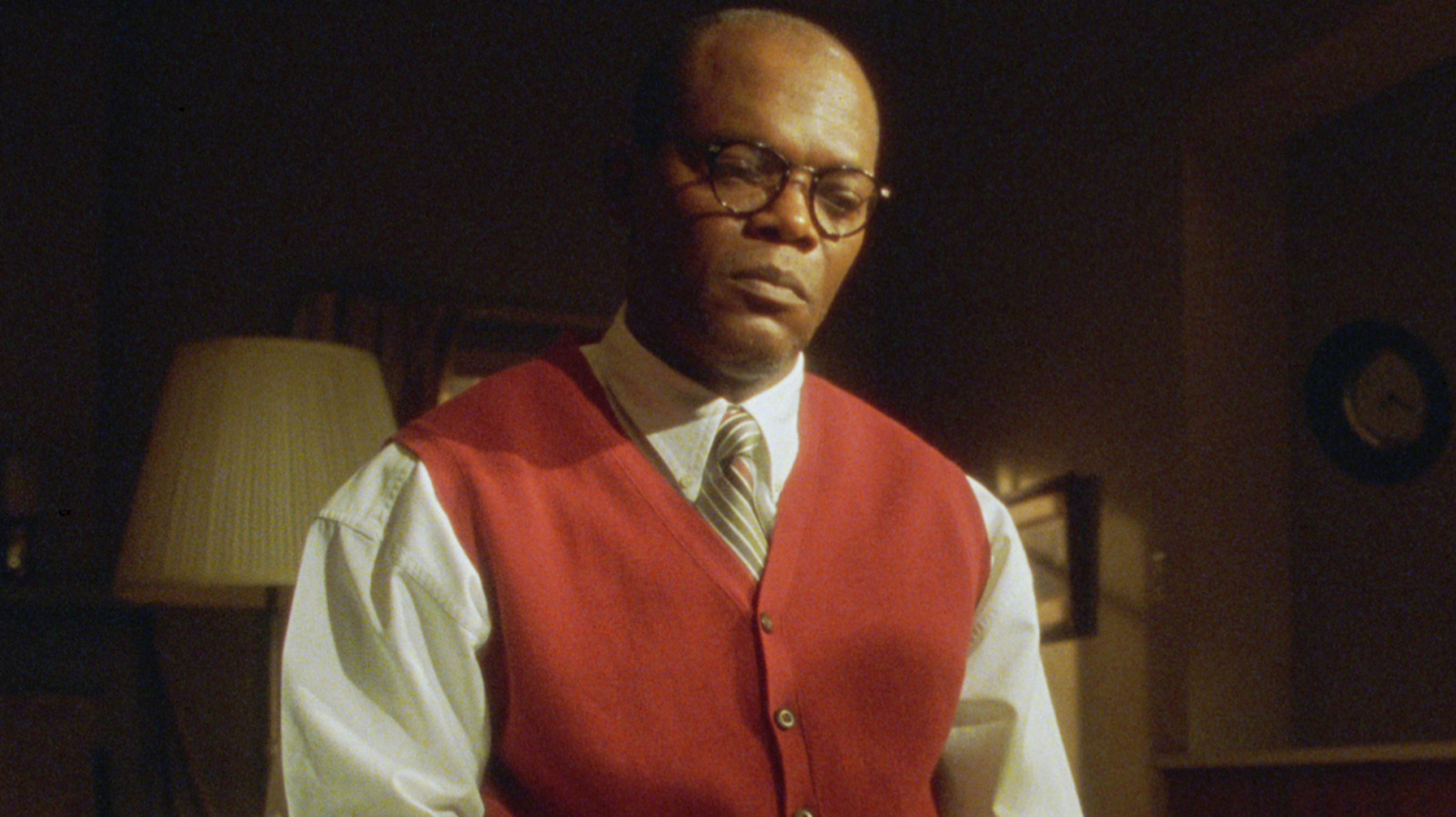
It wasn’t until 1997 that Jackson got his well-deserved chance to become the sole lead in a film. He probably could have played it safe and looked for an action movie, but he focused on a searing thriller about a San Fernando Valley high school teacher who finds himself aggressively victimized by students belonging to a Chicano gang. The film, “One Eight Seven,” was written by former substitute teacher Scott Yagemann, who said 90 percent of his script was drawn from personal experience. Most notably, it was directed by Kevin Reynolds, who was best known for directing two huge Kevin Costner films, “Robin Hood: Prince of Thieves” and “Waterworld.” With its $20 million budget, it was, at least for Reynolds, a small-scale production.
Alas, “One Eight Seven” grossed a whopping $5.7 million at the domestic box office, which wasn’t entirely the film’s fault. It’s a very effective thriller supported by two superb performances from Jackson and Clifton Collins, but Warner Bros. mismanaged it. If the studio had taken more care when releasing the film, they might have had a small hit on their hands.
Samuel L. Jackson considers One Eight Seven his most underrated film
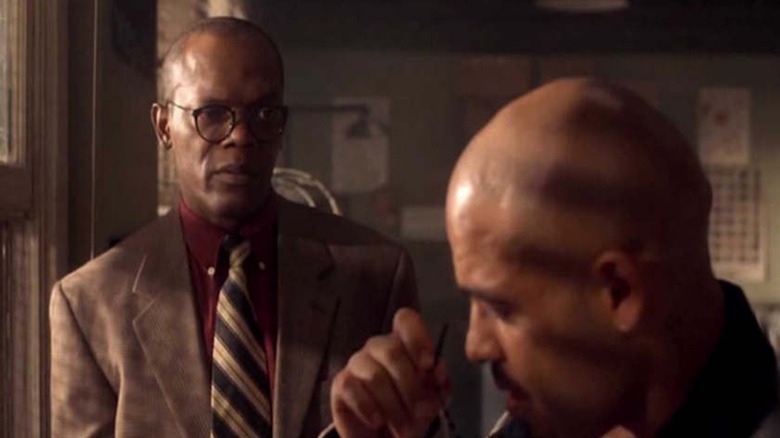
In “One Eight Seven,” Jackson plays Trevor Garfield, a well-meaning high school teacher from Brooklyn who transfers to San Fernando after being stabbed by one of his students. He soon finds himself battling an unruly gang led by César “Kartoon” Sánchez (Collins Jr.). Trevor tries to make peace with the gang, but they refuse his olive branch. Tensions escalate to the point where bookish Trevor is forced to react violently. This leads to a shocking climax and a sobering epilogue that makes it clear that teacher victimization is a problem that won’t go away.
According to a 2024 National Institute of Justice studyonly 17% of teachers surveyed reported no victimization by students. So, “One Eight Seven” is not pure propaganda. It is however a “Death Wish” level exploitation film that eschews nuance in favor of thrills, and I worried at the time that it would have a chilling effect on inner-city schools’ teacher recruitment efforts. Once I saw the film’s opening weekend numbers, that worry disappeared.
Commercially, I think WB made a mistake releasing “One Eight Seven” during the summer 1997 movie season. It’s the kind of movie you release in September or January, when people have seen all the major seasonal stakes and are in the mood to enjoy some straight-up exploitation fare. This movie may not be subtle, but it works. Then again, it received a C+ Cinemascore rating, so maybe I’m in the minority here.
Although Jackson considers “One Eight Seven” his most underrated film, the reviews, mostly negative, killed any Oscar potential. He quickly disappeared, while her star immediately bounced back with standout performances in “Eve’s Bayou” and “Jackie Brown.” That’s the good thing about Jackson: he’s too good to stay down for long.