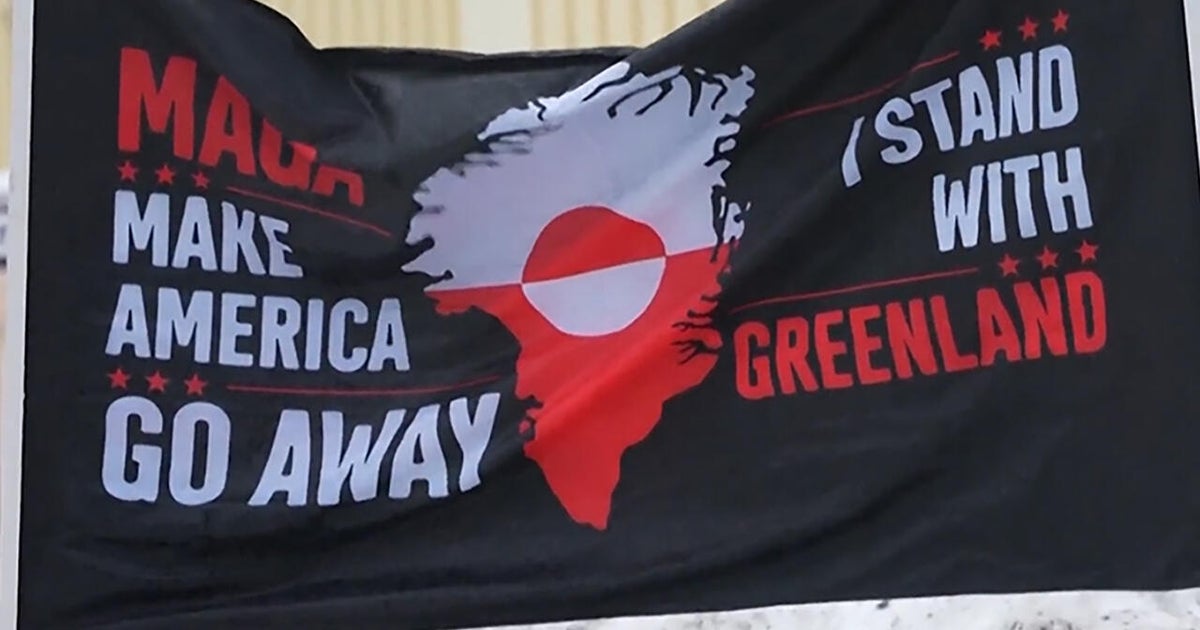

Last week Greenland made headlines. Of course, Greenland has always been big. Three times the size of Texas, the largest island in the world dominates the Arctic space between North America and Europe. Despite its name, 80 percent of Greenland is covered in ice.
The name Greenland came about as a branding strategy, according to Robert Christian Thomsen, a professor of social sciences at Aalborg University in Denmark. Greenland takes its name, he says, from Erik the Red, a Viking who came from Iceland and settled there around 985 AD. When he returned to Iceland, “he said to the old Norwegian who lived there, ‘There’s a beautiful green land west of here. You should go there, you should come join us,'” Thomsen said.
CBS News 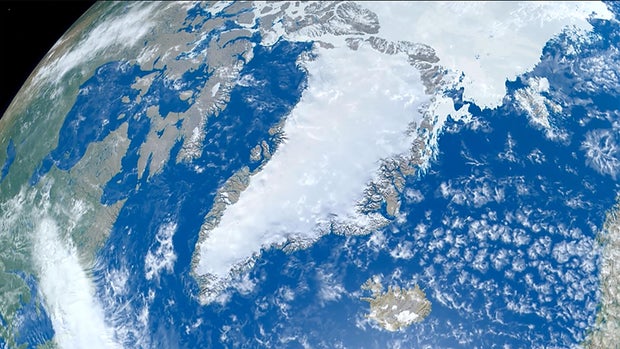
In 1814, Greenland officially became part of the Kingdom of Denmark. So why all this attention to this essentially desolate landscape?
First, there’s security: “If you look at a map, you’ll see that the shortest distance a missile can travel between Moscow and Washington is immediately over the North Pole and Greenland,” Thomsen said.
And climate change has made Greenland even more coveted – more navigable for commercial and military ships, and easier to exploit its rich resources.
“Retreating ice means there is much more and much better access to oil, gas, minerals, including rare earth elements that are needed for our computers, for our electric cars, for batteries,” Thomsen said.
American interest in Greenland is not new. In the 19th century, around the time we purchased Alaska from Russia, the United States expressed interest in acquiring Greenland. Nothing came to fruition.
But in 1917, the United States did buy territory in Denmark: the three Caribbean islands that are today US Virgin Islands. In exchange, the United States recognized Danish sovereignty over Greenland.
Then came World War II.
Thomsen said the island was extremely important to the Allies during the war: “Denmark is already occupied by the Germans. And so Greenland sort of floats unprotected. The US administration said: “We must occupy Greenland to make sure the Germans don’t do it.” »
Keystone-France/Gamma-Keystone via Getty Images 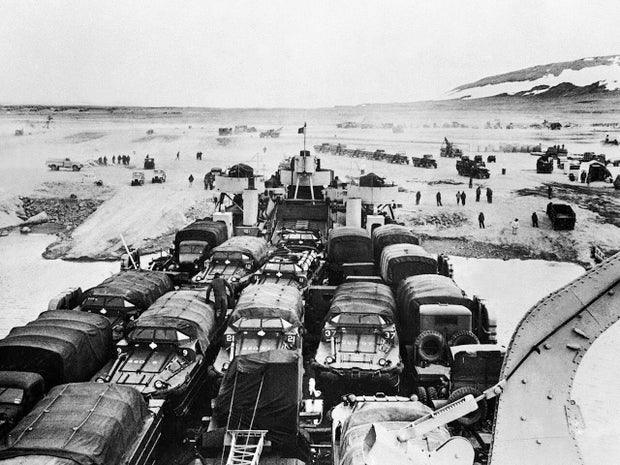
The Allies used the island as a refueling center for military bombers. After the war, in 1951, the United States and Denmark agreed to a more permanent agreement which, according to Thomsen, stipulated that “the United States had virtually free access” [to Greenland]. He can do whatever he wants in terms of establishing military bases, radars, etc. The United States just needs to ask politely. »
But enough about its location and resources. Of course, Greenland also has people – a small population of around 57,000.
Tillie Martinussen, a Greenland native and former MP, said growing up in Greenland was wonderful: “I mean, it’s a very, very safe country to grow up in. We frolic in the snow.”
Martinussen, like nearly 90% of the population, is of Inuit origin. When asked what Greenland’s values are, she replied: “These are the values that we must take care of each other.
While polls show that most Greenlanders don’t want to be American, Martinussen says it’s nothing personal: “I actually like the United States; I love the American people,” she said. “Don’t get me wrong at all. I mean, one of my dreams was actually to drive from east to west.”
But after President Trump’s aggressive rhetoric toward Greenland and its longtime ally Denmark, [“One way or the other, we’re gonna have Greenland”]this love is put to the test.
Sean Gallup/Getty Images 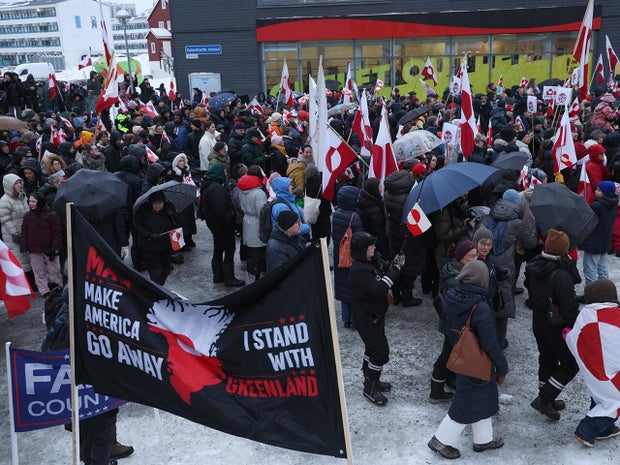
Martinussen said: “We have been good allies for 80 years, which makes this feeling of betrayal so strong in us right now. The children we have now will grow up and be afraid of the United States as the aggressor we remember.”
Thomsen said: “There is a feeling, I think, of betrayal. I grew up with – and most Danes, I think, grew up with – the idea that the United States is our best friend in the world, you know?
For more information:
Story produced by Amol Mhatre. Publisher: Emanuele Secci.
See also: