Tehran has warned the United States and Israel against intervening in Iran’s nationwide protests as it seeks to appease its citizens as protests enter their third week and the death toll rises.
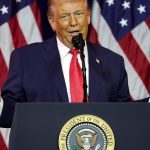
Saturday marked the third night of intensifying nationwide protests, following calls from Reza Pahlavi, the exiled son of the former Shah of Iran, to seize city centers and stage strikes. Since the start of the unrest on December 28, Donald Trump has repeatedly warned the Iranian regime not to fire on demonstrators, with the US president having received a briefing in recent days on new options for military strikes.
The Iranian human rights group based in Oslo said Sunday it confirmed the deaths of at least 192 demonstrators, including nine individuals under the age of 18. Separately, the US Human Rights Activists News Agency said deaths linked to the recent unrest had reached 116, most killed by live ammunition or pellet gunfire.
Iranian President Masoud Pezeshkian struck a conciliatory tone in an interview on state television on Sunday, offering condolences to families affected by the “tragic consequences” of the unrest.
“Your protests must be heard and we must address your concerns. Let’s sit down together, hand in hand, and solve the problems,” he said, without giving details on how this would be done. “I promise our loved ones, perhaps ninety percent of whom have concerns, that we will address their concerns. We will overcome this crisis.”
Yet Pezeshkian accused the United States and Israel of bringing in “terrorists from abroad,” who he said had burned mosques and markets, “decapitated some and burned others alive.” Other officials took an even harder line.
“In the event of an American military attack, the occupied territories as well as American military and maritime centers will be legitimate targets for us,” Iranian Parliament Speaker Mohammad Bagher Ghalibaf said on Sunday in a speech broadcast on state television.
He reiterated his warning that Iran could act preemptively against potential threats. “In self-defense, we do not limit ourselves to reacting only after an attack,” he said.
Trump has been briefed in recent days on a series of options for military strikes in Iran, including non-military sites, a White House official said, confirming a previous New York Times report. The US president is seriously considering authorizing an attack, according to the official.
Israeli Army Radio reported Sunday that the country’s security officials consider it unlikely that Iran would attack Israel at this stage. “No such immediate desire has been identified in Israel – but rather an Iranian focus on domestic issues,” he said, citing unidentified defense officials.
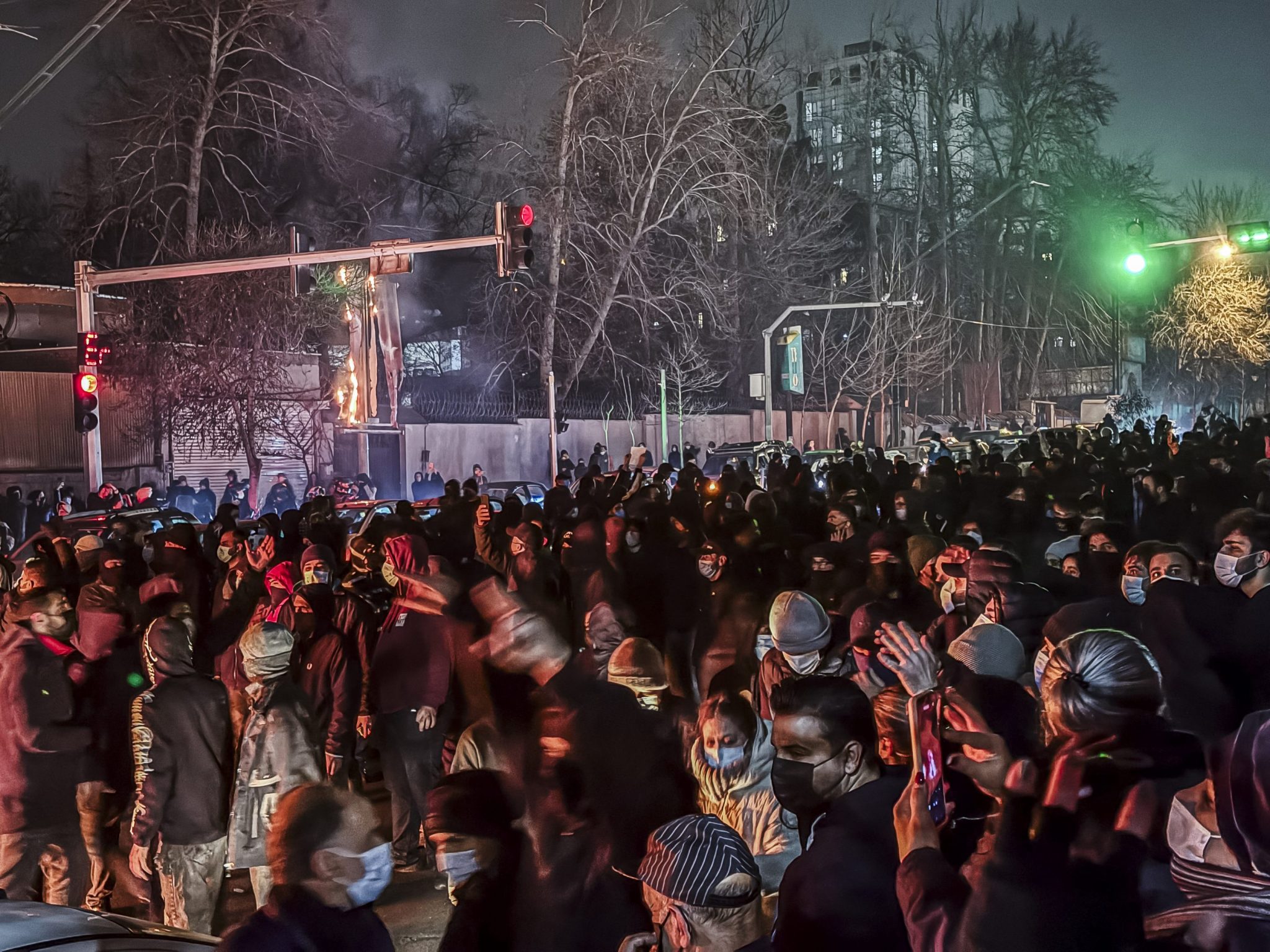
Footage from Iranian cities suggests hundreds of thousands of people, many of them elderly, are defying authorities’ stern warnings not to go out onto the streets, despite a nationwide internet blackout and severe telecommunications restrictions that have blocked calls and text messages since Thursday.
Internet monitoring group NetBlocks said in a statement assignment on X As of early Sunday, internet connectivity in Iran “continues to stagnate at around 1% of ordinary levels.”
However, several videos on social media, apparently from a warehouse in southern Tehran, show people searching dozens of corpses in body bags, lined up on the ground and on stretchers. Wailing can be heard as individuals look at the bags to try to identify their loved ones.
A video released later on Sunday by state newspaper IRIB News appears to show scenes from the same warehouse – one of the first glimpses by state media of the scale of the deaths. In the video, a journalist describes the site as a Tehran state forensic organization compound, with dozens of bodies inside a large indoor facility. Outside, dozens of people gather around ambulances and in the back of what appears to be a refrigerated truck, searching for their loved ones.
Protests broke out last month among pockets of traders in Tehran against deteriorating economic and living conditions, but have since become the largest anti-regime demonstrations to grip the country since 2022, when the death in custody of Mahsa Amini sparked national anger and mass demonstrations.
Learn more: How Sanctions and Currency Crash Fueled Iran’s Unrest: QuickTake
Other videos, apparently from western Tehran on Saturday evening, show thousands of protesters gathered in the streets, waving flashlights in the dark as the city’s lights remain off, amid whistles and chants of “Death to the dictator”. A truck was seen on fire in Mashhad, while images apparently from Sunday showed a state tax administration building burned overnight in eastern Tehran. Bloomberg could not independently verify any of the images.
In a post on Sunday, Pahlavi urged protesters to continue their demonstrations throughout the weekend. He described Trump as “the leader of the free world” who is watching the unrest and “is ready to help.”
On Saturday evening, Iranian Foreign Minister Abbas Araghchi accused the United States and Israel of fueling violent unrest and warned against any action directed against Tehran.
“The only ‘delusional’ aspect of the current situation is the belief that arson does not ultimately burn the arsonists,” Araghchi said.
In addition to those killed, 2,638 other people were arrested, according to the Human Rights Activists organization. said. Among those killed were medical personnel, and seven of the victims were under the age of 18, the statement added.
Iran’s attorney general warned Saturday of speedy trials and death penalty charges against detainees, a day after Supreme Leader Ayatollah Ali Khamenei said the security apparatus would not tolerate “vandalism” or “people acting as mercenaries for foreign powers.”