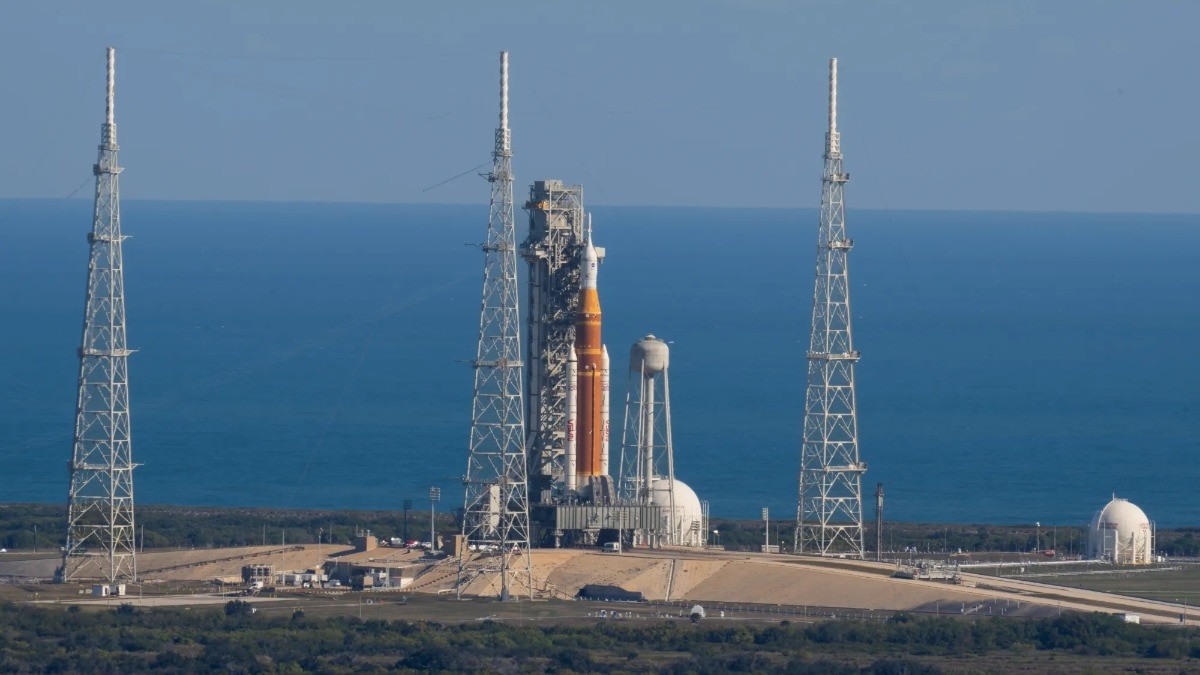

As NASA fine-tunes preparations for the launch of Artemis II, the agency’s first crewed mission near the Moon in more than half a century, attention is increasingly focused not only on schedules and technical tests, but also on the mission’s deeper importance for human spaceflight.
Recent updates from NASA show adjustments made to pre-launch test timelines, including the critical wet runway dress rehearsal, after unusually cold conditions at the Kennedy Space Center. While launch dates remain under review, Artemis II continues to inch closer to liftoff – and a moment that could redefine the future of human exploration beyond Earth.
Return to deep space after 50 years
Artemis II will be the first human mission beyond low Earth orbit since Apollo 17 in 1972. During a roughly 10-day flight, four astronauts will circle the Moon and return to Earth, venturing further from the planet than any crew in more than five decades.
Although the mission does not include a moon landing, it represents a decisive return to deep space, restoring a capability that has not been exercised since the end of the Apollo era.
Crucial test for human life support systems
More than symbolism, Artemis II is a critical test for the mission. For the first time, NASA will operate its modern Orion spacecraft with astronauts on board in a hostile environment beyond Earth’s protective magnetic field.
The mission will validate:
- Survival systems needed for extended deep space travel
- Navigation, propulsion and communications far from Earth
- Crew operations and emergency procedures in real mission conditions
- Radiation Exposure and Thermal Performance in Lunar Space
These systems cannot be fully tested through ground tests or uncrewed flights alone, making Artemis II an essential step before astronauts attempt to land on the Moon again.
Artemis II serves as a gateway mission for NASA‘s long-term exploration plans. Its success is needed before Artemis III, which aims to return humans to the lunar surface, including the Moon’s south polar region.
Beyond the Moon, the mission supports NASA’s broader ambition to use lunar exploration as a testing ground for future human missions to Mars, helping to refine technologies, crew endurance strategies and operational experience.
The crew of Artemis II
The mission will fly with an international crew of four:
- Reid Wiseman, NASA astronaut, commander
- Victor Glover, NASA astronaut, pilot
- Christina Koch, NASA astronaut, mission specialist
- Jeremy Hansen, Canadian Space Agency astronaut, mission specialist
The crew itself marks several historic firsts. Christina Koch will become the first woman to travel near the Moon, Victor Glover the first person of color to venture that far from Earth, and Jeremy Hansen the first non-American astronaut assigned to a mission near the Moon.
Together, the crew will pilot Orion throughout the translunar flight, lunar flyby, and return to Earth, testing human performance and the spacecraft’s systems during each phase of the mission.
Launcher, site and calendar
Artemis II will launch aboard NASA’s Space Launch System (SLS) Block 1 rocket, paired with the Orion spacecraft, from Launch Complex 39B at the Kennedy Space Center in Florida – a site steeped in the history of human spaceflight, from Apollo to the Space Shuttle era.
Before launch, NASA teams must conduct a wet dress rehearsal, a full simulation of launch day refueling and countdown operations using cryogenic thrusters. This test is considered the last major step before setting a firm launch date.
NASA has presented several launch opportunities between February and April 2026, driven by orbital mechanics that allow Orion to safely complete its lunar flyby and free return trajectory. Weather and technical preparation will ultimately determine the exact takeoff date.
Artemis II isn’t just about reaching the Moon again, it’s also about relearning how to send humans safely into deep space, rebuilding capabilities lost after Apollo, and laying the foundation for sustainable exploration beyond Earth.